
Case Study: How we enabled the exhibition of historical ads without using real faces
In January 2026, Grupo Bimbo opened its interactive museum to the public in the Historic Center of Mexico City.
One of the museum’s most powerful areas was also the most delicate: a curated collection of historical advertisements that are part of the public’s collective memory but that, due to image rights and usage licenses, could not be shown as-is.
That’s where sideOUTsticks came in.
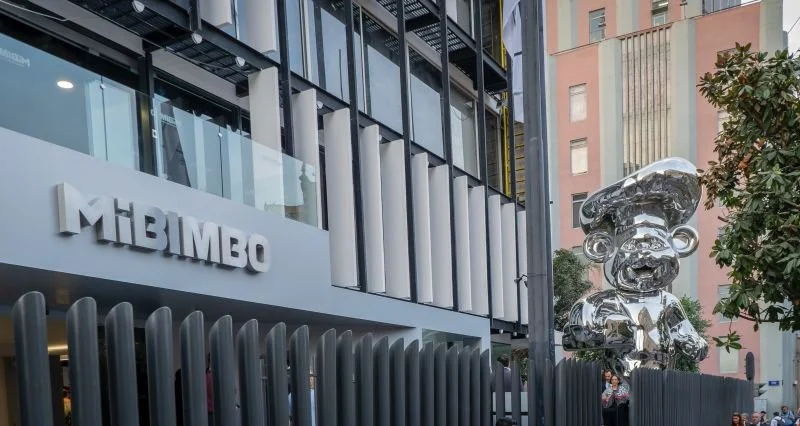
Museo Interactivo Bimbo
The challenge
The museum team wanted to dedicate an entire section to campaigns from past decades: iconic spots, memorable performances, and pieces that show the brand’s cultural evolution.
But the legal team ran into classic archival-rights problems:
campaigns featuring talent with expired or limited releases,
rights originally granted for TV, not for a museum installation,
cases where the talent was no longer available for new authorizations,
legal uncertainty around rights in older materials.
The legal team’s conclusion was that these pieces could not be exhibited in the museum in their original form.
The solution: “digital recasting” for compliance
Through XZAGON Media, the museum reached out to VAPAI Studio to execute a practical solution:
replace the faces with new identities, consistently shot by shot, while keeping intact what made the pieces valuable: performance, rhythm, art direction, directing, music, and narrative.
This wasn’t about touching up a couple of frames—it was large-scale work, handled with cinematic care and deep respect for the original work and the audience.
Scale of the work
Nearly 50 ads modified
More than 250 shots processed
Over 200 completely new faces generated and applied
This required maintaining continuity across shots—age, lighting, angles, and expressions—without breaking the original emotional tone of the footage.
How we did it
We designed a pipeline built for quality, repeatability, and fidelity to the original work, because the volume demanded it:
Technical breakdown of the archive and prioritization
Definition of replacement criteria: what changes, what stays untouched, and acceptable visual thresholds
Creation of consistent new identities suitable for continuity—different enough from the original to anonymize, but not so different that they significantly altered the piece
Shot-by-shot application with AI-assisted tracking and masking
Automated face-swap process
Fine-detail retouching, including color work and grain restoration
Batch-based Quality Control to ensure visual consistency and flag problematic items
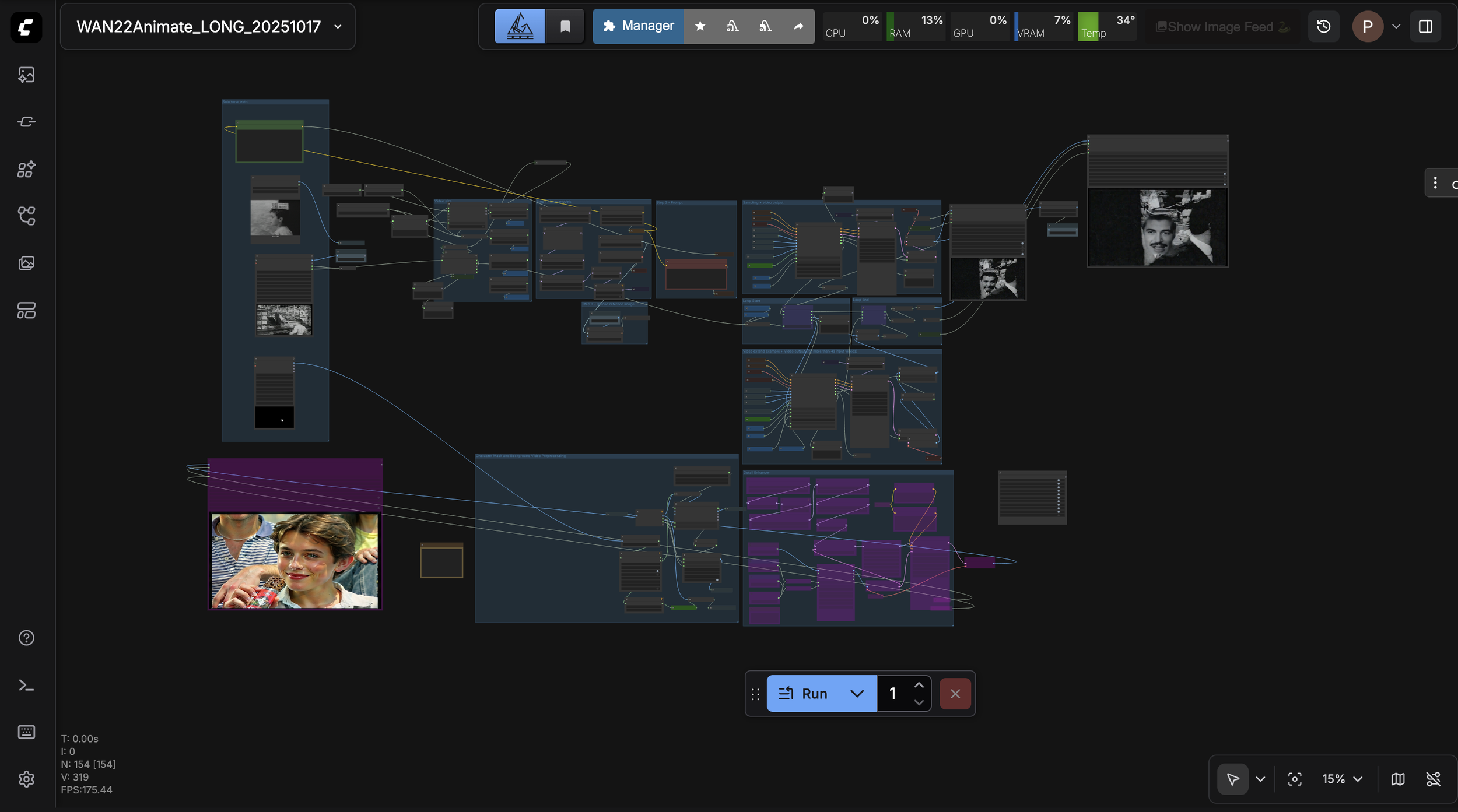
Custom ComfyUI workflow for face-swapping
Results
The museum was able to include the historical section with a scalable solution.
The archive’s cultural value was preserved (nostalgia, aesthetics, narrative).
The risk associated with image rights in legacy material was reduced.
In practice, this also opened an interesting door: rehabilitating audiovisual archives for new contexts (museums, activations, immersive experiences) where the original contracts don’t apply.
What we learned
1) Advertising archives are assets—and being able to reuse them is hugely valuable
Many brands have decades of high-value material, but with fragmented licensing. To solve it, it’s not always possible to track everyone down and re-sign releases. Sometimes, you have to re-produce the asset.
2) Scale is a crucial factor
With 250+ shots, success doesn’t depend on a single artist retouching everything by hand—it depends on a system: criteria, QA, versioning, automation, and a workflow that doesn’t break.
3) The rise of “Synthetic Identity” as a legal safeguard
This project shows the need for a new legal framework: distinguishing between ownership of someone’s image (their biometric face) and ownership of a performance (movement, voice, and intent). By anonymizing the face while preserving the performance, we enabled a “Compliance by Design” model. This allows brands to keep leveraging historical assets without violating individuals’ personality rights—while protecting what truly matters: the artistic work.
About MiBIMBO
The museum is located in the Historic Center of Mexico City and is part of Grupo Bimbo’s 80th anniversary celebration.
It officially opened to the public on January 20, 2026. If you can, go see it—it’s absolutely worth it.
Closing
This project reinforced something we believe more every day: technology doesn’t replace culture—it amplifies it.
If your brand or institution has valuable audiovisual archives and you need to unlock them for new contexts (museum, experience, activation, platform), let’s talk.
